Quick answer. To decide which habit to drop, look at how often you did each one over the last 30 days, not at your streak or your mood. Anything at 70% or above stays as it is. Between 40% and 70%, adjust it: fewer days, a smaller amount or a different time. Below 40%, choose between pausing it, rebuilding it or deleting it, and let one question decide: would you miss it? Drop one at a time, wait a week and check the numbers again.
What you'll find here
- Why ten habits leave you doing five
- Which number to check before you drop anything
- The three zones: holding up, halfway, slipping
- Drop, pause, change or keep
- The question that settles the close calls
- How many habits to drop at once
- Mistakes people make when trimming the list
- How Monkway handles it
Why ten habits leave you doing five
Every habit takes a slot in your day and a little attention. Ten habits means ten slots, ten reminders and ten boxes to check every night. Very few days have room for that on top of work, home and other people.
What happens next is predictable. You keep the easy ones and the ones that already run on autopilot. The new ones, which need the most effort, get squeezed out. A few weeks later you see five habits in red and it feels like everything is failing, even though five are doing fine.
Habits take a while to become automatic. In the study by Phillippa Lally and her colleagues at University College London, published in 2010, participants needed a median of 66 days before a new habit felt close to automatic, with individual cases ranging from 18 to more than 200 days. While a habit is in that stage, it needs attention every day. If five habits are in that stage at once, they compete with each other.
Dropping habits frees up room so the ones that matter can reach the stage where they stop costing effort. If you're starting from scratch instead, the piece on how many habits to start at once covers the other side of the same problem.
Which number to check before you drop anything
People usually look at three numbers when deciding. Two of them mislead you.
Your streak misleads you because one bad day resets it to zero. A habit you did on twenty-five of the last thirty days can have a streak of two. If you decide by streak, you drop habits that are actually going well.
Your mood misleads you because it changes every day. On a tired Monday everything looks optional. On a good Sunday everything looks essential.
The useful number is your 30-day completion rate: out of the days the habit was due, how many you actually did it. Thirty days is long enough that one bad week doesn't sink it, and short enough that a great month long ago can't hide a recent slump.
| Number | What it tells you | Why it fails as a decision tool | When it does help |
|---|---|---|---|
| Current streak | Days in a row you've done it | One miss resets it, even if the month went well | To keep you going on a habit that's already working |
| How you feel today | Your mood right now | It changes from one day to the next | To decide whether to skip today, not whether to drop it |
| 30-day completion rate | Share of due days you did it | Rarely misleads, except for habits under a month old | To decide whether it stays, changes or goes |
| 7-day completion rate | How this week went | One odd week distorts it | To spot a recent drop |
One detail matters here. The rate should be measured against the days the habit was due. If a habit is three days a week, measure it over those three days, not seven. Measured over seven, every weekly habit looks like a disaster.
The three zones: holding up, halfway, slipping
Once you have each habit's 30-day rate, the list sorts itself into three groups. The 40% and 70% cut-offs don't come from a study. They're a practical rule of thumb that separates what's working from what isn't.
| Zone | 30-day completion | What it usually means | What to do |
|---|---|---|---|
| Holding up | 70% or more | The habit fits your life as it is | Nothing. Leave it alone |
| Halfway | 40% to 70% | You care about it, but the format doesn't fit | Change frequency, amount or time |
| Slipping | Under 40% | It doesn't fit, you don't care, or it never really started | Pause, rebuild or delete |
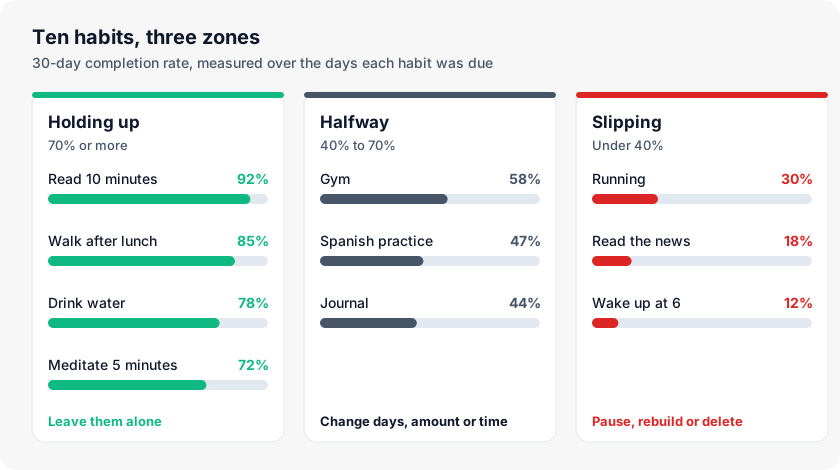
The middle zone is the one people misread most. A habit at 55% almost works. Something about it is too much. It's usually the format: you asked for seven days when four fit, or thirty minutes when ten fit.
The bottom zone is where the real decision sits. That's where the whole habit may need to go.
Drop, pause, change or keep
Dropping is only one of four exits. Before you delete a habit, check whether it belongs in one of the others.
| Action | When to use it | What happens to its history | Example |
|---|---|---|---|
| Keep | It's low, but the dip has a one-off cause | Nothing changes | A trip or a week of flu dragged the number down |
| Change | You care about it, but it doesn't fit as it is | It carries on with the new schedule | "Gym daily" becomes "gym 3 times a week" |
| Pause | You care about it, but now isn't the time | Kept; paused days don't count as misses | "Spanish practice" during a month of moving house |
| Delete | You wouldn't miss it | Gone | "Read the news every morning" that you added on autopilot |
Pausing is the option most people forget. It's for things you want to do, just not right now: a new job, a new baby, exams, a stretch of night shifts. The habit waits without piling up red days. When you're back, you switch it on again with its history intact. If you've already been through that return, how to restart a habit you dropped walks through it step by step.
Changing is the option that pays off most in the middle zone. Some common changes:
- Lower the frequency: from daily to fixed days, or to a number of times per week with no set days.
- Shrink the amount: from twenty minutes of reading to ten, or from ten thousand steps to a walk after lunch.
- Move the time: if you always miss it at the same hour, try one where less is going on.
- Tie it to something you already do: "after my coffee" works better than "in the morning".
That last one has research behind it. In 1999 Peter Gollwitzer reviewed the effect of implementation intentions, plans shaped like "when X happens, I'll do Y", and found they help people get from intending to acting. If a weak habit has no clear "when", giving it one is a small change worth trying before you drop it.
The question that settles the close calls
Sometimes the number isn't enough. A habit sits at 30% and you can't tell whether to pause it or delete it. For those cases there's a simple question: if it vanished from your list tomorrow, would you miss it a month from now?
If the answer is yes, you care about it and the problem is the format or the timing. Change it or pause it.
If the answer is no, or you really can't say, delete it. Plenty of habits end up on the list because someone recommended them or because they sounded good on a Sunday evening. Not caring about them says nothing bad about you.
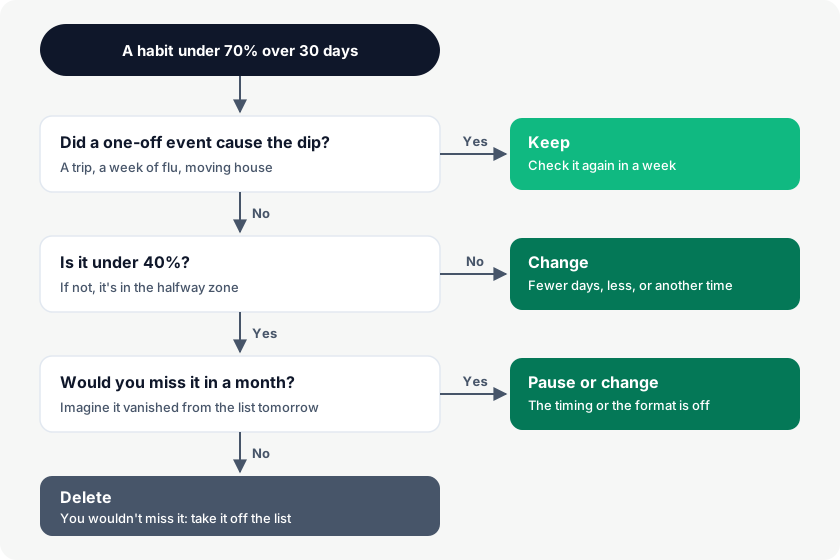
Two more questions help you fine-tune:
- Am I doing this for me, or because I feel I should? "Should" habits slip the most and get missed the least.
- Is this a habit or a project? "Learn to code" is not a habit. "Thirty minutes of the course on Tuesdays and Thursdays" is. If what you have is a big goal, break it into concrete habits before deciding whether it stays.
How many habits to drop at once
When five habits are in red, the temptation is to wipe all five in one go. That works worse than it sounds.
If you drop five habits at once, you can't tell which change helped the rest. It's also easy to overdo it and cut one that was just having a rough fortnight.
| Situation | How many to drop or change | When to check again |
|---|---|---|
| 1 or 2 habits under 40% | Decide both now | In a week |
| 3 to 5 habits under 40% | The two lowest first | A week later, the next ones |
| More than half the list under 40% | Pause everything except the three you care about most | Switch one back on every two weeks |
| Everything above 70% | None | In a month |
The third row is the useful one if that's where you are. When more than half your habits are slipping, the total number of habits is what's failing. Keep three, pause the rest and bring them back slowly. A lot of people find, along the way, that they don't miss half of the paused ones.
It also helps to look at everything in your day, not just the habits. If your habits compete with twelve daily tasks, none of them will reach 70%. The piece on how to tell if your day is overloaded goes into that.
Mistakes people make when trimming the list
A few mistakes come up again and again when people slim down their habit list.
Dropping the hardest habit instead of the one you do least. A habit can be hard and still sit at 80%. If it's working, leave it alone even if it costs effort.
Deciding right after a bad day. At night, tired, with three empty boxes, everything looks expendable. Decide at a neutral moment with the numbers in front of you.
Dropping without checking why it failed. If a habit always failed on Mondays, maybe Monday is the problem, not the habit. Checking which days you miss before deleting saves you from cutting something that only needed different days.
Deleting when you meant to pause. If there's any chance you'll pick it up again in a few months, pausing keeps the history. Deleting doesn't.
Replacing every dropped habit with a new one. The point of trimming is to have fewer. Drop three and add three and you're back where you started.
Obsessing over the streak. A streak is there to keep you going, not to judge a habit. Streaks without quitting explains why losing one matters less than it feels.
How Monkway handles it
In Monkway this whole process is designed to take a few minutes once a week.
In Progress, the habits tab groups your list into three blocks: Holding up (70% or more over 30 days), Halfway (40% to 70%) and Slipping (under 40%). You don't have to calculate anything. The habits table shows each one's streak, best streak, completion rate and last 12 weeks, so you can see at a glance whether a dip is from this week or has been building for a while. The summary also shows a card called The habit you keep least, based on the last few days.
The rate is measured against the days the habit was due. Days you skipped with Skip today and paused days don't count as misses. A three-times-a-week habit isn't penalised next to a daily one.
The Weekly review has a section called Weak habits, listing the ones under 40% over 30 days. Each comes with two buttons: Keep or Pause. That's the quick weekly decision. If you decide a habit should go entirely, you delete it from its own row with Delete.
To change a habit instead of dropping it, open it with Edit habit and adjust the Frequency: Daily, Fixed days, N per week or Monthly. From the same screen you can change the Time or mark it as Paused.
And if the real problem is your whole day, the Maximum things per day setting warns you when your habits and tasks add up to more than fits. It's the same idea applied to everything else.
Frequently asked questions
How many habits is too many?
It depends on your day, not on a fixed number. The signal is when more than half your habits are under 40% over 30 days. If that's the case, you have more than fits right now.
Is it better to drop a habit or lower its frequency?
If you care about the habit, lower the frequency first. A habit you do three times a week and actually keep beats a daily one you keep missing. Only drop it if you wouldn't miss it.
What's the difference between pausing and deleting a habit?
Pausing puts it on hold and keeps its full history. Paused days don't count as misses. Deleting removes it from your list for good, so save it for habits you don't plan to pick up again.
How often should I review my habits?
Once a week is enough to deal with the ones that are slipping. Reviewing daily makes you decide based on your mood. Reviewing only once a month lets a failing habit take up space for four weeks.
What if all my habits are failing at once?
Keep the three you care about most and pause the rest. When those three get above 70%, switch one more back on. When everything slips at once, there's usually too much in the day as a whole.
Should I drop a habit if I lose my streak?
No. A streak breaks with a single bad day and says little about how the habit is going overall. Check the 30-day rate: if it's still high, the habit is fine even though the streak is back to zero.
How long should I give a habit before deciding?
At least a month, so the 30-day rate means something. Before that, the numbers swing a lot from week to week. If after two weeks you never do it at all, you can decide sooner.
Is it bad to have habits at 50%?
No, but they're the best candidates for adjusting. A habit at 50% matters enough to you that you do it half the time. It usually improves when you take away days or amount.
Start with the lowest one
You don't need to rebuild the whole list tonight. Check the 30-day rates, find the lowest habit and ask whether you'd miss it. That single decision already makes the list lighter.
If you'd like the three zones and your weak habits worked out for you every week, Monkway is free to start, on iPhone and in the browser. And once you've trimmed the list, see how to track habits without turning it into one more chore.