Quick answer. To do a weekly review in 15 minutes, look at only four things, in this order: overdue tasks, habits you rarely complete, goals that have stalled for weeks, and ideas that have sat undecided for a month. Give each item one of two exits and move on. Don't re-plan the whole week or rewrite your lists. Start by checking two numbers from last week and finish by making sure next week fits into your days. If you go past 15 minutes, you have too many things open, and that is useful to know too.
What you'll find here
- What a short weekly review is for
- What to leave out so it fits in 15 minutes
- The four questions and their two exits
- The 15 minutes, block by block
- Which day and time to do it
- Signs your review isn't working
- How Monkway does it
What a short weekly review is for
Undecided things pile up during the week. A task that slipped past its date. A habit you haven't done in ten days. An idea you jotted down on Tuesday and never looked at again. None of them matters much on its own. Together they make opening your list feel heavy, and once opening the list feels heavy, you stop opening it.
A weekly review clears that pile once a week. The idea was made popular by David Allen's method, Getting Things Done, where the weekly review is a core habit. The catch is that the full version asks you to go through every project, every list and every commitment. Plenty of people try it on a Sunday, spend ninety minutes on it and never do it again.
A short version aims lower: nothing stays in limbo for more than a week.
There is a reason this brings relief. In a 2011 paper, E. J. Masicampo and Roy Baumeister found that making a specific plan for an unfinished goal reduced intrusive thoughts about it. People didn't have to finish the goal. Deciding what to do and when was enough. A short review does exactly that with whatever you've been dragging around: you give it an exit and it stops nagging you.
What to leave out so it fits in 15 minutes
What makes a review long is how much you put into it. These are the parts that eat the most time and that you can cut without losing anything important.
| What a long review usually includes | Why it drags | What to do in the 15-minute version |
|---|---|---|
| Going through every open task | You read items that are fine and need no decision | Look only at overdue tasks |
| Checking every habit | Most of them are working and need no change | Look only at habits under 40% |
| Planning each day of next week | The detailed plan falls apart by Wednesday | Only check that no day goes over your limit |
| Rewriting goals and priorities | That's a quarterly reflection, not a weekly one | Look only at goals with no progress in two weeks |
| Processing every note and idea | Recent ones aren't ready for a decision yet | Look only at ideas older than a month |
| Journaling about the week | Useful, but it's a different activity | Do it separately if it helps you |
The rule behind all of it is simple: the short review only includes things that need a decision. Anything going well stays untouched. Anything recent can wait.
The four questions and their two exits
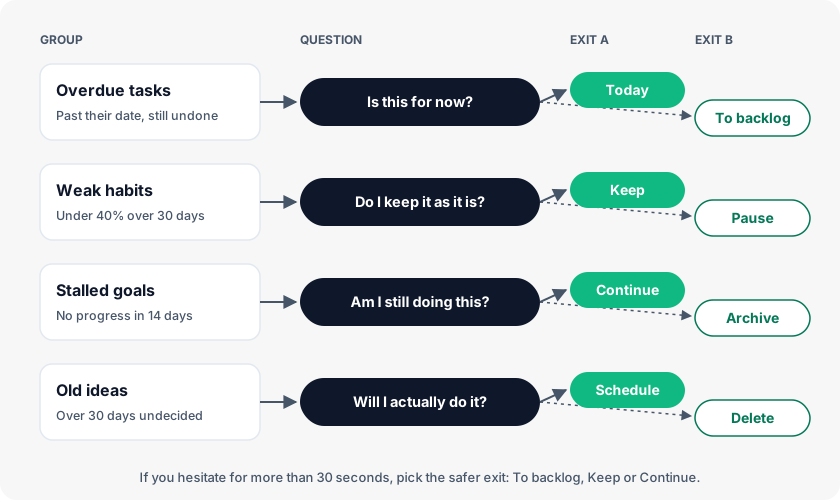
After that filter you're left with four groups. Each one answers a question, and each item has two possible exits. Having only two options is what lets you decide in seconds.
| Group | What goes in | Question | Exit A | Exit B |
|---|---|---|---|---|
| Overdue tasks | Tasks past their date and still undone | Is this for now? | Today | To backlog, no date |
| Weak habits | Under 40% completion over 30 days | Do I keep it as it is? | Keep | Pause |
| Stalled goals | No progress in 14 days | Am I still doing this? | Continue | Archive |
| Old ideas | Written down over 30 days ago, still undecided | Will I actually do it? | Schedule on a free day | Delete |
A few notes on each group:
Overdue tasks. Once a task has passed its date, the date means nothing. Picking a new one at random just sets it up to go overdue again. Either you do it today or you take it off the calendar and park it in an undated list until it makes sense. If you've built up a big pile, what to do with a pile of overdue tasks covers the first clean-up, which usually takes longer.
Weak habits. The 40% over 30 days cut-off is a practical rule of thumb, not a scientific figure. Below it, a habit fails more often than it happens. Keep means "I'm sticking with it, this week was odd". Pause means "it doesn't fit right now". If you're torn between pausing and dropping it for good, how to decide which habit to drop goes through it more slowly, but you don't have to settle that during the review.
Stalled goals. A goal with two weeks of zero progress takes up space in your head and gives you nothing back. Continuing is fine if there's a clear reason: a trip, a week off sick. If there isn't, archiving it is more honest than leaving it open. If the goal matters but you don't know where to start, what's usually missing is breaking it into concrete habits.
Old ideas. An idea you haven't touched in a month has two sensible destinations: you give it a day or you delete it. If you schedule it, pick a day that has room. If you delete it, that's fine. If it was a good idea, it will come back. Where to write down ideas you might not do covers the rest of that system.
The 15 minutes, block by block
Order matters. You start with the numbers for context, move on to the most urgent items and finish by looking ahead.
| Minutes | What you do | What you look at | How you know you're done |
|---|---|---|---|
| 0 to 2 | Look back at last week | How much you closed against how much you planned | You have a percentage in mind |
| 2 to 6 | Overdue tasks | Every task past its date | Nothing is overdue |
| 6 to 9 | Weak habits | Habits under 40% over 30 days | Each one is on Keep or Pause |
| 9 to 11 | Stalled goals | Goals with no progress in 14 days | Each one continues or is archived |
| 11 to 13 | Old ideas | Ideas older than a month | Each one has a day or is gone |
| 13 to 15 | Look at next week | Each day's load against your limit | No day goes over |
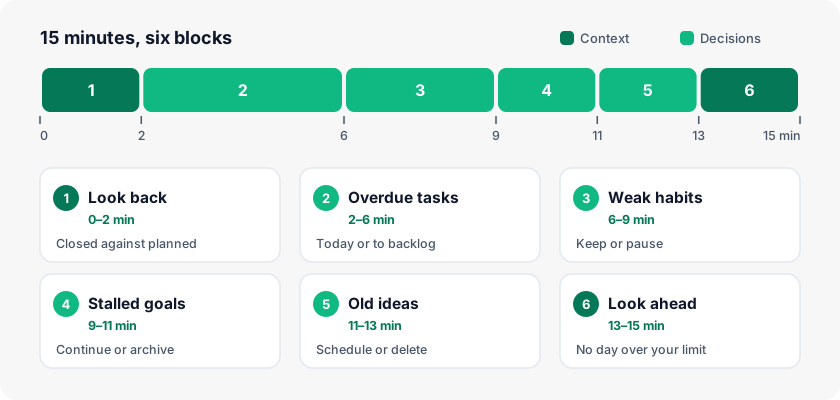
On the first block: the useful figure is closed divided by planned. If you planned 40 things and closed 26, you're at 65%. There's no universal good number. What helps is comparing it with your own weeks. If it drops three weeks in a row, you're taking on more than fits.
On the last block: don't plan the whole week. Just count how many things each day has and compare that with the most you know you get through. If Thursday has twelve and you usually manage eight, move four. If you're not sure what your number is, how many tasks to plan per day helps you find it.
One rule to keep it short: if a decision takes you more than thirty seconds, pick the safer exit (To backlog, Keep, Continue) and make a note to look at it properly another day. Hard calls are easier with time, outside the review.
Which day and time to do it
There's no correct day. Some days fit better depending on how your week runs.
| Timing | Upside | Downside | Fits if |
|---|---|---|---|
| Friday afternoon | You close the work week while it's still fresh | End-of-week tiredness | Your week runs Monday to Friday |
| Sunday afternoon | You start Monday with everything decided | It can take the edge off your Sunday | Starting the week without a plan stresses you |
| First thing Monday | You decide with the new week in front of you | It competes with email and urgent requests | You have a quiet slot before work starts |
| Your day off, if you work shifts | It matches a real break in your week | It moves from month to month | Your weeks don't start on Monday |
What does help is tying it to something you already do. "After my Sunday coffee" works better than "on Sunday". In 1999 Peter Gollwitzer reviewed the effect of implementation intentions, plans of the form "when X happens, I will do Y", and found they help people move from intention to action. A review with a clear "when" gets skipped less.
If you miss a week, don't do two reviews back to back. Do this week's. Whatever went overdue last week is still overdue and will show up anyway.
Signs your review isn't working
After three or four weeks the review should get faster. If it doesn't, one of these signs tells you what to adjust.
| Sign | What it usually means | What to do |
|---|---|---|
| It takes more than 25 minutes every week | You have too many things open | Plan fewer things per day |
| The same tasks go overdue every week | You give them dates without having room | Send them to the backlog instead of rescheduling |
| You always pick Keep for the same habits | You don't dare pause them | Pause one for two weeks and see if you miss it |
| There's never anything in old ideas | You aren't capturing ideas, or you delete them too soon | Nothing, if you're not missing anything. If you are, capture more |
| You skip the review two weeks running | The time you picked doesn't fit | Move it to another day or tie it to another routine |
| Next week always goes over your limit | You plan with an ideal week in mind | Leave one lighter day on purpose |
The first sign is the most common. If every review feels like a mountain, what needs adjusting is how much comes in during the week. How to tell if your day is overloaded has signs to catch that before it piles up.
One caveat: a short review doesn't replace thinking now and then about what you want from the next few months. That reflection is longer and rarer, maybe once a quarter. The weekly review only keeps what you've already decided in good order.
How Monkway does it
In Monkway on desktop, at app.monkway.app, the weekly review comes ready-made with these same four groups.
When a new week starts and you haven't done the review yet, a Weekly review strip appears in Today with the number of pending decisions, for example "5 decisions". If there's nothing to decide, it says "Nothing to decide: just close the week". The Review button opens it. You can also get there from Progress, which shows whether this week's review is pending or closed.
At the top you see four numbers from the previous week, Monday to Sunday: Closures, Planned, Consistency (closures divided by planned, as a percentage) and Active journeys. Below that you see how many closures each journey had that week. That's the first block of the review done for you.
Then come the four sections. Only the ones with something in them appear:
- Overdue tasks: each task shows how long ago it went overdue and has two buttons, Today and To backlog.
- Weak habits: habits under 40% over 30 days, with their rate. Buttons Keep and Pause. Only habits at least two weeks old show up, so a brand-new one isn't judged too early.
- Stalled journeys: journeys with no closure in 14 days. Buttons Continue and Archive.
- Old backlog: anything that has been in the backlog for over 30 days. Schedule puts it on the first day that stays under your Maximum things per day. Delete asks for confirmation first.
Each decision removes the item from the list. When you're done, Close review saves the week. For the last block, looking at next week, the load meter in Today warns you on any day that goes over your maximum.
Frequently asked questions
How long should a weekly review take?
Between 10 and 20 minutes if you only look at what needs a decision. The first few weeks can take longer because things have piled up. If it still takes more than 25 minutes after a month, you're taking on more than fits in your days.
What's the difference between a weekly review and planning the week?
The review looks back and closes what's open. Planning looks ahead and spreads out what's new. In the short version you only check that next week doesn't go over your limit. You can do the detailed planning afterwards or day by day.
What if I skip a week?
Do this week's review and don't try to catch up on the last one. Whatever went overdue is still overdue and shows up anyway. It will just take a bit longer that one time.
Do I need to review every open task?
No. Tasks with a future date don't need a decision yet. The short review only covers overdue tasks. The rest get reviewed naturally when their day comes.
Is Sunday or Monday better for a weekly review?
It depends on your week. Sunday lets you start Monday with everything decided. Monday lets you decide with the new week in front of you. Pick the time you can tie to something you already do, like your first coffee.
What if there's nothing to decide?
Look at last week's numbers and next week's load, then close it. A week with no pending decisions is a good sign. That review takes three minutes.
Should I pause a habit just because it's under 40%?
No. Keep is a valid exit if you know why it dropped: a trip, a week off sick, a busy stretch at work. Pausing makes sense when you can see the habit doesn't fit your life as it is right now.
Is a weekly review useful if I only track habits and not tasks?
Yes, it will just be shorter. You'll only look at weak habits and, if you use them, stalled goals. Five minutes is usually enough.
Start with the first block
You don't need to prepare anything for your first review. Set a 15-minute timer, look at how much you closed last week and start with overdue tasks. If time runs out halfway through, stop. You'll be faster next week.
If you'd like the four groups already filtered for you every Monday, with two buttons per item, try Monkway for free. And if you then want to spread out your week more carefully, see how to create a weekly routine that holds up.